Why Organising Receipts Changes the Way You See Money
Most people don’t struggle with money because they spend too much.
They struggle because they don’t see it clearly.
Receipts disappear.
Transactions blur together.
Weeks pass and suddenly the balance feels unfamiliar.
That gap — between what you think you spent and what actually happened — is where confusion starts.
And once money feels confusing, people pull away.
That’s why the idea of a receipt bank matters more than most people realise.
Not as a product.
As a mindset.
What people really mean when they say “receipt bank”
When people talk about a receipt bank, they’re rarely talking about storage.
They’re talking about relief.
A receipt bank represents:
- One place for financial evidence
- A way to stop guessing
- A buffer between spending and stress
It’s the opposite of loose receipts, forgotten purchases, and vague bank feeds.
At its core, a receipt bank is about making money tangible again.
Because when money feels real, people make calmer decisions.
Why receipts matter more than transactions
Bank transactions are blunt instruments.
They show:
- A merchant name
- A dollar amount
- A date
That’s it.
A receipt tells a story.
It shows:
- What you actually bought
- How much each item cost
- Why the purchase made sense at the time
That difference matters.
A transaction says something happened.
A receipt explains what happened.
And understanding always beats assumption.
The hidden stress of missing receipts
Most people underestimate how much mental load missing receipts create.
It shows up as:
- “I don’t remember spending that much”
- “That doesn’t look right”
- “I’ll deal with it later”
Later becomes never.
And over time, that uncertainty compounds.
People don’t trust their numbers.
They don’t trust their memory.
Eventually, they stop looking altogether.
That’s not a money problem.
That’s an information problem.
A receipt bank creates continuity
Money doesn’t stress people because it fluctuates.
It stresses people because it feels disconnected.
A receipt bank reconnects the dots.
Instead of:
- Random charges
- Forgotten purchases
- Monthly surprises
You get:
- A timeline
- Context
- A clear trail of decisions
That continuity builds confidence.
Not overnight.
But steadily.
Why Australians struggle with receipt organisation
Most Australians aren’t taught to manage receipts.
We’re taught to:
- Earn
- Spend
- Save (if possible)
Receipts are treated like admin.
Something you only worry about at tax time.
But by then, the story is already fragmented.
Paper receipts fade.
Emails get buried.
Photos sit in camera rolls forever.
Without a system, receipts become noise.
And noise leads to avoidance.
Digital receipts didn’t solve the problem
Digital receipts were supposed to make things easier.
In reality, they:
- Land in different inboxes
- Use inconsistent formats
- Get lost among promotions
Instead of one clear trail, people end up with fragments everywhere.
A proper receipt bank isn’t about digital versus paper.
It’s about centralisation.
One place.
One habit.
One source of truth.
The emotional side of receipts
Receipts carry more than numbers.
They carry:
- Impulse decisions
- Convenience spending
- “I was tired” purchases
- “It felt worth it at the time” moments
That’s human.
When receipts are hidden, those emotions turn into guilt.
When receipts are visible, they turn into understanding.
Understanding softens self-judgement.
And softer self-judgement leads to better financial behaviour.
Why receipt capture works better after spending
Most people try to control money before they spend it.
Budgets.
Limits.
Rules.
But real change happens after the purchase.
When you log a receipt:
- The decision is already made
- Defensiveness drops
- Awareness increases
A receipt bank works because it meets people after real life happens.
Not in theory.
In reality.
Receipt banking isn’t about being perfect
There’s a misconception that organising receipts means being meticulous.
It doesn’t.
It means being consistent enough.
You don’t need:
- Perfect categorisation
- Daily reviews
- Accountant-level detail
You need:
- A simple place to lodge receipts
- A habit that fits normal life
- Visibility without pressure
That’s where people stick with it.
Why “I’ll remember it” never works
Memory is unreliable.
Especially with money.
Small purchases blend together.
Weeks collapse into each other.
Context disappears.
Receipts externalise memory.
They take pressure off your mind.
Instead of remembering, you refer.
That alone reduces financial fatigue.
A receipt bank turns spending into data, not drama
When spending stays vague, it becomes emotional.
When spending is documented, it becomes neutral.
A receipt bank does that shift quietly.
No lectures.
No red flags.
Just information.
And information creates options.
The connection between receipts and trust
People often say they don’t trust budgeting apps.
What they really mean is:
“I don’t trust the numbers.”
That distrust usually comes from missing detail.
Receipts restore trust because they’re evidence.
You can see it.
You can verify it.
You can trace it.
That transparency changes the relationship with money.
Why receipt banking supports better decisions
Good financial decisions don’t come from restriction.
They come from clarity.
When people can see:
- Patterns
- Frequencies
- Categories over time
They adjust naturally.
Not because they were told to.
Because the picture made sense.
That’s behavioural change that lasts.
Expense tracking without receipts is incomplete
Tracking totals alone only tells half the story.
You might know:
- How much you spent
But not:
- Why
- On what
- In what context
A receipt bank fills that gap.
It’s the difference between:
- “I spent $1,200”
- “I spent $1,200 because of these specific choices”
Only one of those leads to learning.
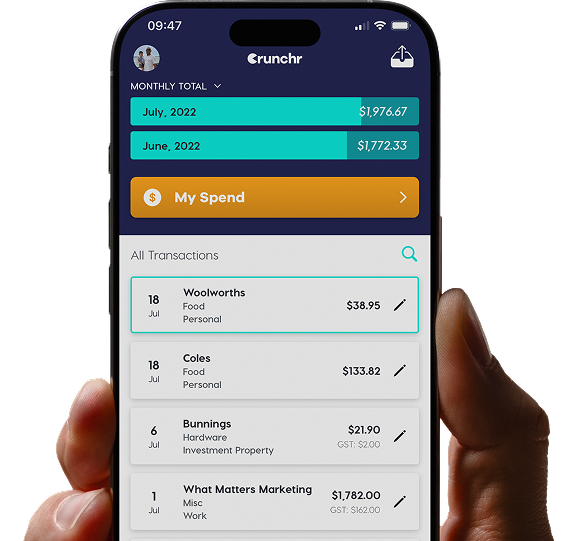
Why Crunchr treats receipts as the foundation
Crunchr is built around a simple idea:
Receipts are the most honest record of spending.
Not predictions.
Not assumptions.
Not delayed estimates.
Real purchases.
Captured when they matter.
By lodging receipts into one place, people stop guessing and start understanding.
That’s the shift most Australians are actually looking for.
Receipt banking for everyday life, not accountants
A receipt bank shouldn’t feel like work.
It should feel like relief.
Something that:
- Clears mental clutter
- Reduces uncertainty
- Makes money feel manageable
If a system requires discipline to maintain, it won’t last.
If it fits real behaviour, it will.
Patterns only emerge when receipts accumulate
One receipt doesn’t tell you much.
Ten start to show habits.
Fifty show patterns.
A few months tell a story.
That’s when people have those quiet moments of insight.
“I didn’t realise I spent that much on that.”
“Oh, that’s where it’s going.”
Those moments don’t come from shame.
They come from visibility.
Receipts reduce end-of-month shock
Most financial stress hits at the end of the month.
Balances don’t match expectations.
Bills feel heavier than expected.
A receipt bank smooths that out.
Nothing is hidden.
Nothing is surprising.
You’ve already seen the story unfold.
Receipt banks and financial calm
Calm doesn’t come from having more money.
It comes from knowing where your money went.
Receipts provide closure.
They complete the loop between action and awareness.
And that sense of completion lowers stress.
Money clarity isn’t loud
Financial clarity isn’t flashy dashboards or complex reports.
It’s quiet.
It’s knowing.
It’s recognising patterns.
It’s not feeling startled by your own spending.
That’s what a receipt bank supports.
Final thought
You don’t need to overhaul your finances to feel better about money.
You don’t need extreme budgets or rigid rules.
You need:
- A place for receipts
- A habit of noticing
- A system that reflects real life
That’s what receipt bank thinking is really about.
One receipt.
One moment of clarity.
One step closer to trust.