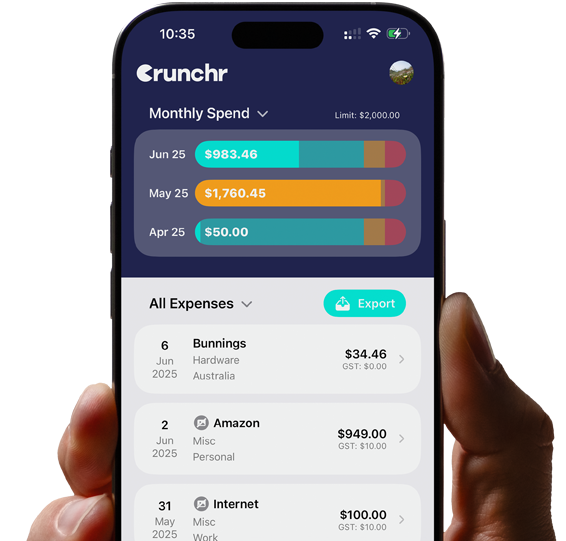
Receipt management should be easy.
Snap a photo. Upload it. Move on.
But for a lot of businesses, freelancers, and everyday users, that’s not how it feels.
Platforms like Dext have been around for years and are often positioned as the default solution for receipt management — particularly within accounting and bookkeeping workflows.
But newer tools like Crunchr are shifting expectations.
Not by piling on features.
By rethinking the experience entirely.
Below, we break down why Crunchr stands out as a stronger alternative to Dext, especially for receipt management, usability, accessibility, and building real-world financial confidence.
This isn’t just about accountants.
It’s about people.
How Receipt Management Has Changed
Receipt management isn’t simply about storage anymore.
Today, it’s about:
- Knowing exactly where your money went
- Seeing spending habits clearly
- Making decisions without pressure
- Feeling in control instead of overwhelmed
That’s where many legacy tools fall short.
They prioritize capturing data, not helping users understand it.
Dext is a clear example of this gap.
What Dext Gets Right — And Where It Falls Short
To be fair, Dext has strengths.
It provides:
- Receipt scanning
- OCR data extraction
- Accounting software integrations
- Bank feed connections
- Approval and review workflows
For accounting firms handling multiple clients, this setup can work well.
But for many users — especially those without accounting backgrounds — Dext can introduce unnecessary friction.
Dext Is Designed for Accountants First
This is the underlying issue.
Dext was built primarily for:
- Accounting practices
- Bookkeepers
- Back-office finance teams
Not everyday users.
That design choice shows up in:
- A more complex interface
- Accounting-heavy language
- Feature prioritization that favors firms
- Layered pricing structures
If you’re not financially trained, Dext can feel dense.
Even intimidating.
Crunchr Starts From the Other Direction
Crunchr takes the opposite approach.
Instead of asking:
“How should accountants process receipts?”
Crunchr asks:
“How do people actually spend money?”
That single shift changes everything.
Crunchr vs Dext: Two Different Philosophies
Dext: Capture Now, Understand Later
With Dext, receipt management revolves around:
- Uploading receipts
- Extracting data
- Exporting it elsewhere
Understanding usually comes later.
Often in another system.
Often by someone else.
Crunchr: Clarity at the Point of Entry
Crunchr focuses on immediate clarity through expense lodging.
Not live bank syncing.
Not delayed reports.
You log expenses as they happen.
The result:
- Awareness increases instantly
- Spending behavior adjusts naturally
- Budgets become tangible, not theoretical
That’s a fundamental difference.
Why Crunchr Works Better for Everyday Receipt Management
- Built for People, Not Accounting Professionals
Crunchr doesn’t assume:
- Financial expertise
- Accounting knowledge
- Perfect record-keeping habits
It assumes real life.
Messy receipts.
Inconsistent spending.
Vague categories.
Dext expects structure upfront.
Crunchr helps structure emerge over time.
- Receipt Management Without the Stress
Many people feel uneasy using traditional receipt management software.
Why?
Because:
- Mistakes feel costly
- Interfaces feel unforgiving
- Numbers feel permanent
Crunchr lowers that pressure.
It’s designed to build financial confidence, not enforce rigid compliance.
That distinction matters more than feature lists.
- Crunchr Encourages Better Habits
Dext is largely passive.
You upload receipts.
They get processed.
Someone else reviews them.
Crunchr is more interactive.
You see:
- Spending trends
- Category totals
- Budget impact
As you log expenses.
That immediate feedback changes behavior.
Dext organizes receipts.
Crunchr reshapes habits.
Usability: Crunchr vs Dext
Where Dext Can Struggle
Common feedback about Dext includes:
- A cluttered interface
- Too many configuration options
- Accountant-focused language
- Slower onboarding
It often works best when someone else sets it up for you.
That’s a limitation.
Crunchr Feels Instinctive
Crunchr doesn’t require:
- Training sessions
- Long walkthroughs
- Accountant involvement
You open it.
It makes sense.
Receipt management should feel intuitive.
Crunchr delivers on that.
Pricing: Complexity vs Clarity
Dext Pricing Can Feel Heavy
Dext pricing often depends on:
- Receipt volume
- User roles
- Add-ons
- Firm-based plans
For individuals and small businesses, this can feel disproportionate.
Especially when:
- You’re paying for features you don’t need
- You’re tied into accounting-centric workflows
Crunchr Pricing Reflects Real Use
Crunchr pricing aligns with:
- Actual usage
- Practical needs
- Everyday users
It’s not built to scale across hundreds of clients in a firm.
It’s built to support your business — or your life.
That difference matters.
Receipt Management for Non-Accountants
This is where Crunchr clearly outperforms Dext.
Most people:
- Aren’t accountants
- Don’t want to become one
- Don’t think in ledgers
Dext often assumes they do.
Crunchr doesn’t.
Crunchr vs Dext for Freelancers
Freelancers need:
- Fast receipt capture
- Clear tax visibility
- Minimal mental load
Dext can feel like too much.
Crunchr feels appropriately sized.
You:
- Log expenses
- See totals
- Stay compliant
Without getting buried in accounting logic.
Crunchr vs Dext for Small Businesses
Small business owners juggle everything.
Finance is just one piece.
Crunchr supports:
- Quick expense entry
- Clear categorization
- Ongoing budget awareness
Without forcing you into accounting software every time.
Dext often pulls users deeper into complexity.
The Issue With Integration-First Tools
Dext emphasizes integrations.
And integrations do matter.
But leading with integration creates problems.
Because:
- Users rely on multiple systems
- Insight is delayed
- Errors cascade between tools
Crunchr prioritizes standalone understanding first.
Integrations come after.
That order makes a difference.
Why Crunchr’s Live Results Model Matters
Crunchr delivers clarity through expense lodging — not bank feeds.
That’s intentional.
Bank feeds show:
- What already happened
Expense lodging shows:
- What you’re doing right now
That awareness gap is crucial.
Dext focuses on historical accuracy.
Crunchr focuses on present awareness.
Receipt Management Is Emotional, Not Just Administrative
This is something Dext largely overlooks.
Receipt management is tied to:
- Control
- Stress
- Guilt
- Confidence
Crunchr acknowledges the emotional side.
Dext treats it as purely administrative.
Reporting: Crunchr vs Dext
Dext Reporting
Dext reports are:
- Detailed
- Accountant-oriented
- Often overwhelming
Good for audits.
Less helpful for daily decisions.
Crunchr Reporting
Crunchr reports are:
- Clear
- Visual
- Immediately actionable
You don’t need to decode them.
You just understand them.
Receipt Management in Real Life
Real life includes:
- Late nights
- Lost receipts
- Cash payments
- Mental exhaustion
Crunchr works within that reality.
Dext often expects discipline first.
That mismatch leads to drop-off.
Adoption and Long-Term Use
One of the biggest challenges in receipt management software is abandonment.
People stop using it.
Usually because it feels like work.
Crunchr reduces friction enough that:
- Users stick with it
- Habits form naturally
- Data quality improves over time
Dext often relies on external pressure to maintain usage.
Receipt Management for Real People
Crunchr isn’t trying to turn users into bookkeepers.
It’s designed to help them:
- Understand spending
- Feel capable
- Make smarter decisions
That’s the difference.
Dext Alternatives for Receipt Management
If you’re searching for:
- Alternatives to Dext
- Better receipt management tools
- Simpler expense tracking
- Receipt management without accounting complexity
Crunchr is worth serious consideration.
When Dext Still Makes Sense
Dext may still be a good fit if:
- You run an accounting firm
- You manage many clients
- You need deep ledger integration
That’s a specific audience.
Most people aren’t in it.
Who Crunchr Is Built For
Crunchr is designed for:
- Freelancers
- Sole proprietors
- Small businesses
- Teachers
- Everyday users
- Anyone seeking clarity without overwhelm
If that sounds like you, Crunchr is likely the better fit.
Where Receipt Management Is Headed
The future of receipt management is moving away from:
- Back-office processing
- Accountant-only tools
- Delayed insight
And toward:
- Real-time awareness
- Behavioral change
- Financial confidence
Crunchr is already aligned with that future.
Dext is still evolving toward it.
Final Take: Crunchr vs Dext
Dext organizes receipts.
Crunchr reshapes how people relate to money.
That’s the real distinction.
If you want:
- A tool built for accountants → Dext
- A tool built for people → Crunchr
Receipt management shouldn’t feel like punishment.
Crunchr shows it doesn’t have to.
This comparison is based on product positioning, design philosophy, and intended user experience. Individual needs and use cases may vary.