What It Really Means for Families (And Why Preparation Matters More Than You Think)
If you’ve got kids, you already know this.
There’s no such thing as a “small expense.”
Everything adds up.
Groceries go up. Clothes get replaced faster than expected. School costs sneak in. Activities, healthcare, random things you didn’t plan for — it just keeps moving.
So when people hear about the Child Tax Credit, it sounds like a bit of relief.
And it is.
But here’s the part most people don’t talk about enough:
The credit itself isn’t the hard part.
Being ready to actually use it properly is.
What the Child Tax Credit Actually Is
At a basic level, the Child Tax Credit is designed to reduce the amount of tax you owe for each qualifying child.
Simple idea.
You’ve got dependents. The system gives some financial recognition of that.
In many cases, it can reduce your tax bill significantly. Depending on your situation, part of it may even be refundable.
That’s where it starts to matter in real life — not just on paper.
Why It Matters More Than People Expect
A lot of tax benefits sound good but feel distant.
This one is different.
Because raising kids is not a one-time cost.
It’s constant.
- Food
- Clothing
- School supplies
- Activities
- Healthcare
- Transport
- Everything in between
The Child Tax Credit doesn’t cover all of that — obviously — but it helps offset some of the pressure.
And when you’re managing a household, even a moderate reduction in your tax bill can make a difference.
The Basic Eligibility (Without Overcomplicating It)
Most people don’t need a deep technical breakdown.
But broadly, the Child Tax Credit depends on things like:
- The child’s age
- Whether they’re claimed as a dependent
- Your income level
- Residency requirements
There are income thresholds where the credit starts to phase out.
There are also rules around how much of it may be refundable.
The details matter — but they vary from person to person.
Which is why this article isn’t about replacing proper tax advice.
It’s about something else.
Where Families Actually Struggle
It’s not usually eligibility.
It’s not even understanding the rules.
It’s everything leading up to tax time.
Because by the time you’re filing your return, the important decisions have already happened.
Throughout the year.
And most of those moments are small.
You spend money on your kids constantly.
But you don’t always track it clearly.
Why Preparation Is the Real Advantage
This is the part that often gets missed.
The Child Tax Credit is calculated at tax time.
But your financial clarity is built long before that.
If your finances are scattered, unclear, or only partially tracked, everything becomes harder:
- Understanding your full situation
- Knowing what supports your claim
- Feeling confident about your numbers
And that uncertainty creates stress.
Not because anything is wrong — just because nothing feels fully clear.
Where a Tool Like Crunchr Fits In
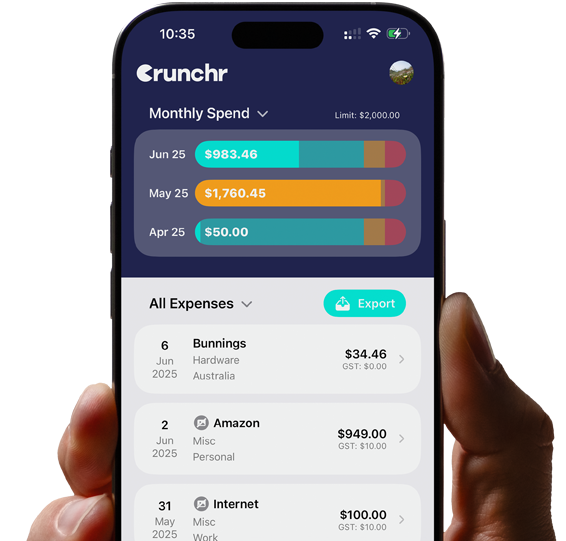
Crunchr doesn’t calculate your Child Tax Credit.
That’s not its role.
What it does is help you understand your financial life while it’s happening.
Which turns out to be far more useful than people expect.
Because with better visibility, you can:
- See where your household money is going
- Track family-related expenses consistently
- Stay organized without relying on memory
- Build a clearer picture over time
And that clarity feeds directly into tax season.
A Real-Life Pattern Most Families Recognize
Think about a normal month.
You’re not thinking:
“I’m preparing for my Child Tax Credit.”
You’re thinking:
- “We need groceries”
- “School needs supplies”
- “There’s a payment due”
- “Something unexpected came up”
So spending just happens.
Fast. Often. Without much pause.
That’s why tracking usually falls behind.
Not because people don’t care.
Because life doesn’t slow down to let you organize it.
Why “I’ll Sort It Later” Doesn’t Work Well
Later is always busier than you expect.
And when tax season arrives, you’re trying to reconstruct months of activity.
That’s when things feel uncertain.
You might have everything technically required — but it doesn’t feel clean.
That feeling matters.
Because confidence plays a big role in how people approach their taxes.
Clarity Changes the Experience
When your finances are tracked consistently, something shifts.
You don’t feel like you’re guessing anymore.
You can see:
- Your spending patterns
- Your household costs
- Your financial position overall
That doesn’t just help with tax.
It helps with everything.
How Crunchr Supports That Shift
Crunchr works best when it’s part of your everyday routine.
Not as a “tax tool” — but as a visibility tool.
- You log expenses as they happen
- You keep everything in one place
- You don’t rely on memory later
It’s not about perfection.
It’s about reducing friction.
Because the easier something is, the more likely you are to keep doing it.
Why This Matters for the Child Tax Credit Specifically
Even though the Child Tax Credit itself isn’t based on every individual expense, your broader financial picture still matters.
Being organized helps you:
- Understand your income clearly
- Track related financial responsibilities
- Support your overall tax position
- Work more effectively with your accountant or tax preparer
And most importantly — it removes uncertainty.
The Hidden Benefit: Less Stress
This is the part people don’t expect.
When your finances are messy, tax season feels heavy.
Not overwhelming. Just… uncomfortable.
You’re unsure. You’re double-checking. You’re second-guessing.
When things are organized, that feeling disappears.
You’re not scrambling.
You’re just reviewing.
You Still Need the Right Guidance
It’s important to say this clearly.
Tools like Crunchr help with organization.
They don’t replace:
- IRS rules
- Tax professionals
- Personalized advice
Everyone’s situation is different.
But when your information is clean, any advice you get becomes far more useful.
A More Realistic Way to Approach It
You don’t need to master every detail of the Child Tax Credit.
You just need to be more prepared than last year.
That’s enough to create a real difference.
- Track a bit more
- Forget a bit less
- Stay slightly more organized
That’s progress.
Final Thought
The Child Tax Credit is valuable.
But its real impact depends on what happens before tax season.
Every decision. Every expense. Every moment you either capture something — or let it pass.
Most people focus on the credit itself.
But the real advantage comes from clarity.
Because when your finances are clear, everything else — including tax — becomes easier to handle.
Not perfect.
Just… under control.