What Actually Matters (And Why Most People Get It Wrong)
Most people don’t sit around thinking about taxes during the year.
They think about work. Bills. Family. Getting through the week.
Taxes only really show up when there’s a deadline.
And that’s usually when the confusion starts.
You hear terms like tax credits and deductions, and they sound important — which they are — but also a bit interchangeable.
They’re not.
And understanding the difference isn’t just a technical thing. It directly affects how much money you keep.
What People Think “Tax Credits and Deductions” Means
If you ask someone casually, they’ll usually say something like:
“They both reduce your taxes.”
That’s true… but it’s incomplete.
Because they reduce your taxes in very different ways.
And that difference is where people either save money — or quietly leave it behind.
What a Tax Deduction Actually Does
A deduction reduces your taxable income.
So instead of being taxed on your full income, you’re taxed on a smaller number.
Simple example:
- You earn $60,000
- You claim $10,000 in deductions
- You’re now taxed on $50,000
So yes, you save money — but indirectly.
The amount you save depends on your tax rate.
What a Tax Credit Actually Does
A tax credit works differently.
It reduces the actual amount of tax you owe.
Simple example:
- You owe $3,000 in tax
- You have a $1,000 tax credit
- You now owe $2,000
No extra calculation. No adjustment to income.
It’s direct.
Why This Difference Matters More Than It Sounds
At a glance, both seem helpful.
But in practice:
- Deductions reduce what gets taxed
- Credits reduce what you actually pay
That’s why credits are often more powerful.
But that doesn’t mean deductions don’t matter.
They absolutely do.
The real issue is something else entirely.
The Part Most People Miss
It’s not understanding tax credits and deductions that causes problems.
It’s tracking them.
Because most tax benefits are tied to real-life actions:
- Spending money on work-related items
- Paying for education
- Supporting a family
- Running a business
- Covering certain types of expenses
And those things don’t happen neatly at tax time.
They happen randomly, throughout the year.
Why People Miss Out (Without Realizing It)
It usually comes down to small moments.
You pay for something. You move on.
Later, you try to remember.
And that’s where things break down.
Common patterns:
- You forget the expense entirely
- You remember it, but don’t have proof
- You’re unsure if it qualifies, so you skip it
- You estimate and feel uncomfortable about it
None of these feel like big mistakes.
But across a full year, they add up.
Memory Is the Weakest System
People trust memory more than they should.
Not because they’re careless — but because it feels easier in the moment.
“I’ll remember that.”
But you won’t. Not reliably.
Especially not for small, frequent expenses.
And those are often the ones that matter most when combined.
The Real Advantage Isn’t Knowledge — It’s Preparation
You can understand tax credits and deductions perfectly.
But if you don’t have records, it doesn’t help.
That’s the part most advice skips over.
It’s not just about knowing what qualifies.
It’s about having the information ready when you need it.
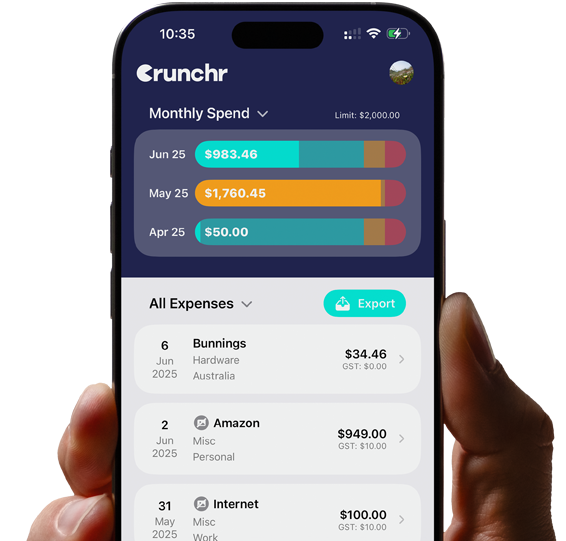
Where a Tool Like Crunchr Fits In
Crunchr doesn’t try to explain tax rules.
That’s not its role.
Instead, it focuses on the part people actually struggle with — capturing what’s happening during the year.
Because once something is recorded, it becomes usable.
What that looks like:
- You track expenses as they happen
- You keep things organized without effort
- You don’t rely on memory later
- You build a clear financial record over time
So when it’s time to deal with tax credits and deductions, you’re not starting from zero.
Why Timing Changes Everything
There’s a big difference between:
“I’ll deal with this later”
and
“It’s already done”
That difference doesn’t feel huge in the moment.
But across a year, it completely changes your outcome.
Because every small expense either gets captured… or disappears.
A Simple Scenario Most People Relate To
Let’s say you pay for a few work-related tools during the year.
Nothing major.
- A subscription here
- Some supplies there
- Maybe a course or resource
Each one feels small.
So you don’t rush to record it.
Then tax season comes.
You try to remember.
You find some of them. Miss others. Guess a few.
That’s normal.
But it’s also avoidable.
Why Organization Beats Last-Minute Effort
Trying to fix everything at the end is always harder.
Because you’re dealing with:
- Old information
- Missing context
- Unclear intent
Whereas capturing something in the moment is simple.
You know what it was for.
You have the receipt.
You don’t need to think.
That’s the shift.
What Actually Helps Most People
It’s not a more complex system.
It’s a simpler one that gets used consistently.
That usually means:
- Minimal steps
- Quick actions
- No overthinking
- No “I’ll do it later”
Because later is where things get lost.
How This Impacts Tax Credits and Deductions Specifically
When your records are clear:
- You’re more confident about what you can claim
- You’re less likely to miss eligible deductions
- You can support your claims properly
- You reduce the risk of errors
And that applies to both credits and deductions.
Not just one.
The Subtle Benefit People Don’t Expect
When your finances are tracked consistently, something else happens.
You start to notice patterns.
Not just for tax.
For everything.
- Where your money goes
- What’s necessary vs optional
- What’s growing over time
That awareness leads to better decisions — without forcing it.
You Still Need the Right Advice
It’s important to be clear about this.
Tracking tools like Crunchr help with organization.
They don’t replace:
- Tax professionals
- Accountants
- IRS guidance
Your situation is always specific to you.
But having clean, organized records makes any advice you get far more useful.
A More Realistic Goal
You don’t need to become an expert in tax credits and deductions overnight.
You just need to be slightly more prepared than you were last year.
That’s enough to create a real difference.
- Capture more
- Forget less
- Stay a bit more organized
That’s it.
Final Thought
Tax credits and deductions matter.
But they don’t exist in isolation.
They’re built on everything that happens before tax season.
Every expense. Every decision. Every moment you either record something — or don’t.
Most people focus on the rules.
But the real advantage comes from having the information ready.
Because when everything is already there, tax season stops being a scramble.
And starts becoming a process.
Simple. Clear. Done.